


When Soil Turns Sour
Why Soil pH Can Make or Break Your Crop Success
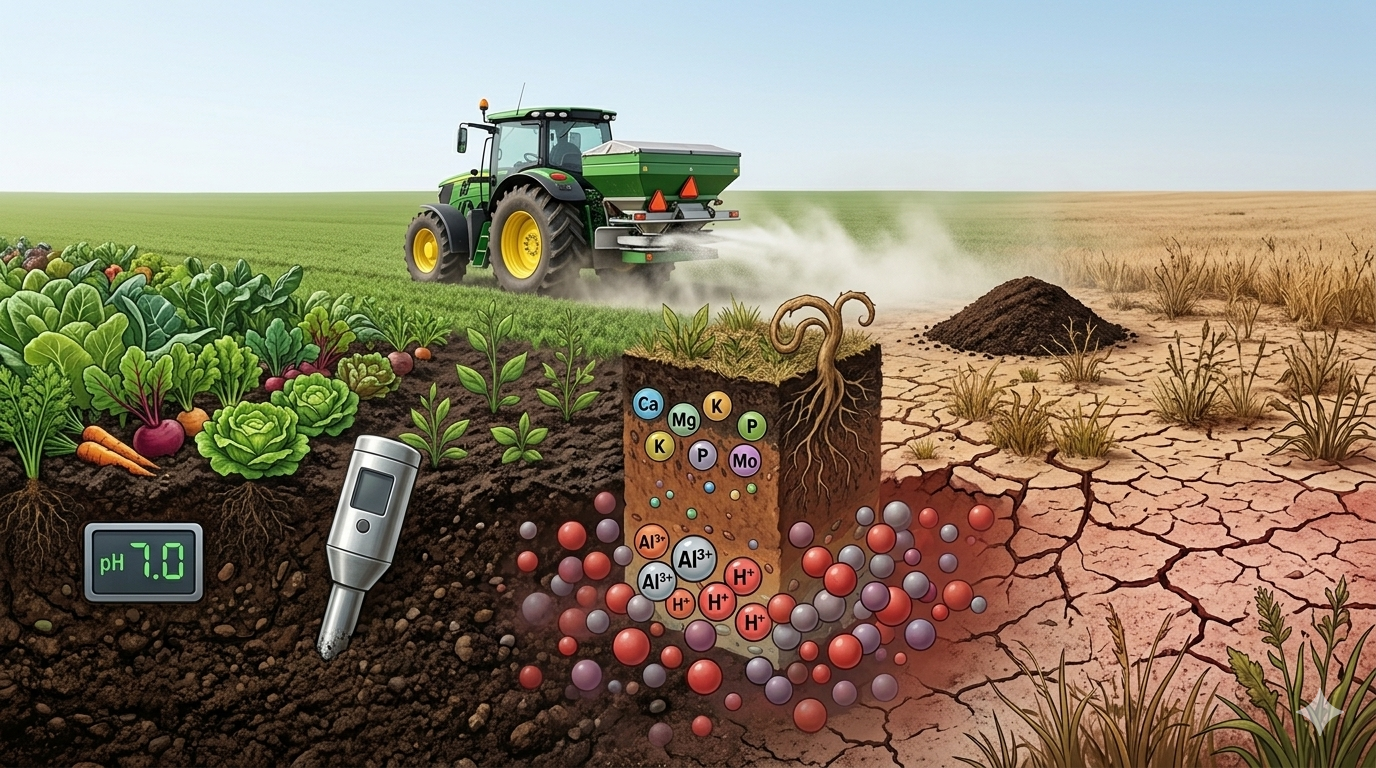
Many farmers focus on fertilizers, irrigation, and pest management, yet overlook one invisible factor that silently controls crop performance, soil pH. A field may receive all the nutrients a crop needs, but if the soil is acidic, those nutrients can remain locked away from plant roots. The result is poor growth, weak root systems, lower yields, and wasted investment. Understanding acidic soils is therefore one of the most important steps toward achieving healthier crops and sustainable productivity.
What Is Acidic Soil?
Acidic soil is soil with a pH value below 7.0. The lower the pH, the more acidic the soil becomes. Soil acidity develops when hydrogen ions accumulate in the soil and replace essential nutrient elements on soil particles.
In acidic conditions, important nutrients such as calcium, magnesium, potassium, phosphorus, and molybdenum become less available to plants. At the same time, elements like aluminum and manganese may become excessively available, reaching levels that can damage roots and restrict plant growth.
Acidic soil is not necessarily infertile, but if left unmanaged, it can significantly reduce crop productivity and soil health.
Why Soil pH Matters
Soil pH acts like a master controller of nutrient availability. Even when nutrients are present in the soil, plants may not be able to absorb them efficiently if the pH is too low.
A balanced soil pH supports:
- Better nutrient availability
- Improved microbial activity
- Stronger root development
- Enhanced fertilizer efficiency
- Better soil structure
- Higher crop productivity
When soils become too acidic, all of these benefits begin to decline.
Classification of Acidic Soils
Acidic soils can be categorized according to their pH level.
Slightly acidic soils generally have a pH between 6.0 and 6.5. Most crops perform well in this range because nutrient availability remains relatively high.
Moderately acidic soils typically have a pH between 5.0 and 6.0. Nutrient availability starts to decrease, and sensitive crops may show deficiency symptoms.
Strongly acidic soils have a pH between 4.5 and 5.0. Aluminum toxicity becomes a significant concern, and root growth may be restricted.
Very strongly acidic soils have a pH below 4.5. These soils often suffer from severe nutrient deficiencies, poor biological activity, and conditions unsuitable for many agricultural crops.
Key Characteristics of Acidic Soil
Acidic soils display several distinct physical and chemical characteristics.
One of the most common features is a low concentration of essential base nutrients such as calcium, magnesium, and potassium. These nutrients are often washed away over time, leaving the soil nutrient-poor.
Acidic soils frequently contain elevated levels of aluminum and manganese, which can become toxic to plants when present in excessive amounts.
Microbial activity is often reduced, slowing down the decomposition of organic matter and nutrient cycling processes.
In many regions, acidic soils appear reddish, yellowish, or brown due to the accumulation of iron and aluminum compounds.
These soils may also exhibit poor structure, reduced water-holding capacity, and lower overall productivity if not properly managed.
How Acidic Soils Develop
Soil acidity rarely develops overnight. It is usually the result of natural processes combined with long-term farming practices.
High Rainfall and Leaching
In areas receiving heavy rainfall, water percolates through the soil profile and washes away calcium, magnesium, potassium, and sodium. As these basic elements are removed, acidity gradually increases.
Continuous Use of Acid-Forming Fertilizers
Repeated application of ammonium-based fertilizers can contribute to soil acidification. Over time, the conversion of ammonium into nitrate releases hydrogen ions, making the soil more acidic.
Decomposition of Organic Matter
As organic residues decompose, they release various organic acids. While this process is natural and beneficial in moderation, long-term accumulation can contribute to lower soil pH.
Nature of the Parent Material
Some soils originate from naturally acidic rocks and minerals. These soils tend to remain acidic throughout their development unless corrective measures are applied.
Continuous Crop Removal
Every harvest removes nutrients from the field. If these nutrients are not replenished adequately, soil fertility declines and acidity often increases over time.
How Acidic Soil Affects Crops
The effects of acidic soil extend far beyond nutrient deficiencies.
Restricted Root Growth
High concentrations of soluble aluminum can damage root tips, reducing root length and limiting the plant's ability to absorb water and nutrients.
Nutrient Deficiencies
Even when nutrients are present in the soil, plants may struggle to access phosphorus, calcium, magnesium, and molybdenum under acidic conditions.
Reduced Microbial Activity
Beneficial soil microorganisms function best within specific pH ranges. Acidic conditions can suppress microbial populations responsible for nutrient cycling and organic matter breakdown.
Poor Fertilizer Efficiency
Farmers often apply more fertilizers to compensate for poor crop growth, yet acidic conditions may prevent plants from utilizing these nutrients effectively.
Lower Yield Potential
The combined effects of toxicity, nutrient deficiency, and poor root development ultimately reduce crop performance and profitability.
Common Signs of Acidic Soil in the Field
Farmers can often identify acidic soil problems through crop symptoms and field observations.
Typical signs include:
- Stunted plant growth
- Weak root systems
- Yellowing leaves despite fertilizer application
- Poor tillering in cereals
- Reduced flowering and fruit set
- Uneven crop growth across the field
- Low response to fertilizers
- Increased susceptibility to stress conditions
However, visual symptoms alone are not enough. Soil testing remains the most reliable way to determine pH levels accurately.
Managing Acidic Soils Effectively
Apply Agricultural Lime
Liming remains the most widely used and effective method for correcting soil acidity. Agricultural lime supplies calcium while neutralizing excess acidity.
Dolomitic lime provides both calcium and magnesium, making it especially useful where magnesium deficiencies exist.
The required lime quantity depends on soil pH, soil type, and crop requirements. Regular soil testing helps determine the appropriate application rate.
Increase Organic Matter
Organic matter acts as a natural buffer against pH fluctuations. Adding compost, farmyard manure, crop residues, and green manures improves soil structure, enhances microbial activity, and gradually supports healthier soil conditions.
Use Balanced Fertilization
Avoid excessive reliance on acid-forming fertilizers. Balanced nutrient management helps prevent further acidification while maintaining crop productivity.
Improve Soil Biology
Healthy microbial populations contribute to nutrient cycling and improved soil resilience. Organic amendments, microbial inoculants, and reduced chemical stress can help rebuild biological activity.
Manage Water Properly
Good drainage prevents nutrient losses and minimizes further soil degradation. Controlling erosion also helps preserve valuable topsoil and nutrients.
Select Suitable Crops
Some crops tolerate acidic conditions better than others. Tea, pineapple, sweet potato, rice, and certain forage species can perform relatively well in acidic soils. Selecting suitable crops can improve profitability while soil improvement measures are being implemented.
The Role of Soil Testing
The first step in managing acidic soil is understanding its current condition. Regular soil testing provides valuable information about pH, nutrient status, organic carbon levels, and potential toxicity issues.
Rather than guessing, farmers can make precise management decisions based on actual soil data. This not only improves crop performance but also reduces unnecessary input costs.
Building Long-Term Soil Resilience
Correcting acidic soil is not a one-time activity. Sustainable soil management requires continuous monitoring, replenishment of nutrients, addition of organic matter, and practices that support biological activity.
The goal should not simply be to raise pH but to create a living, balanced soil ecosystem capable of supporting healthy crops year after year. When soil chemistry, biology, and structure work together, productivity becomes more stable, fertilizer efficiency improves, and farming systems become more resilient.
Acidic soil is one of the most common yet overlooked challenges in agriculture. Its effects reach deep into the root zone, influencing nutrient availability, microbial activity, crop health, and overall farm profitability. Fortunately, acidic soils can be managed successfully through regular soil testing, liming, organic matter addition, balanced fertilization, and sound soil stewardship practices.
A productive field is not built solely with fertilizers and irrigation. It begins with understanding the soil beneath our feet. By managing soil acidity proactively, farmers can unlock hidden productivity, improve nutrient efficiency, and build a stronger foundation for sustainable agriculture.
#AcidicSoil #SoilHealth #SoilPH #SustainableAgriculture #RegenerativeAgriculture #HealthySoilHealthyPlants #SoilManagement #CropNutrition #FarmProductivity #OrganicFarming #SoilTesting #AgriculturalInnovation #PlantHealth #SoilRestoration #SmartFarming