


The Major Diseases That Threaten Rice Crops
Recognize early, respond wisely and safeguard your harvest from unseen damage
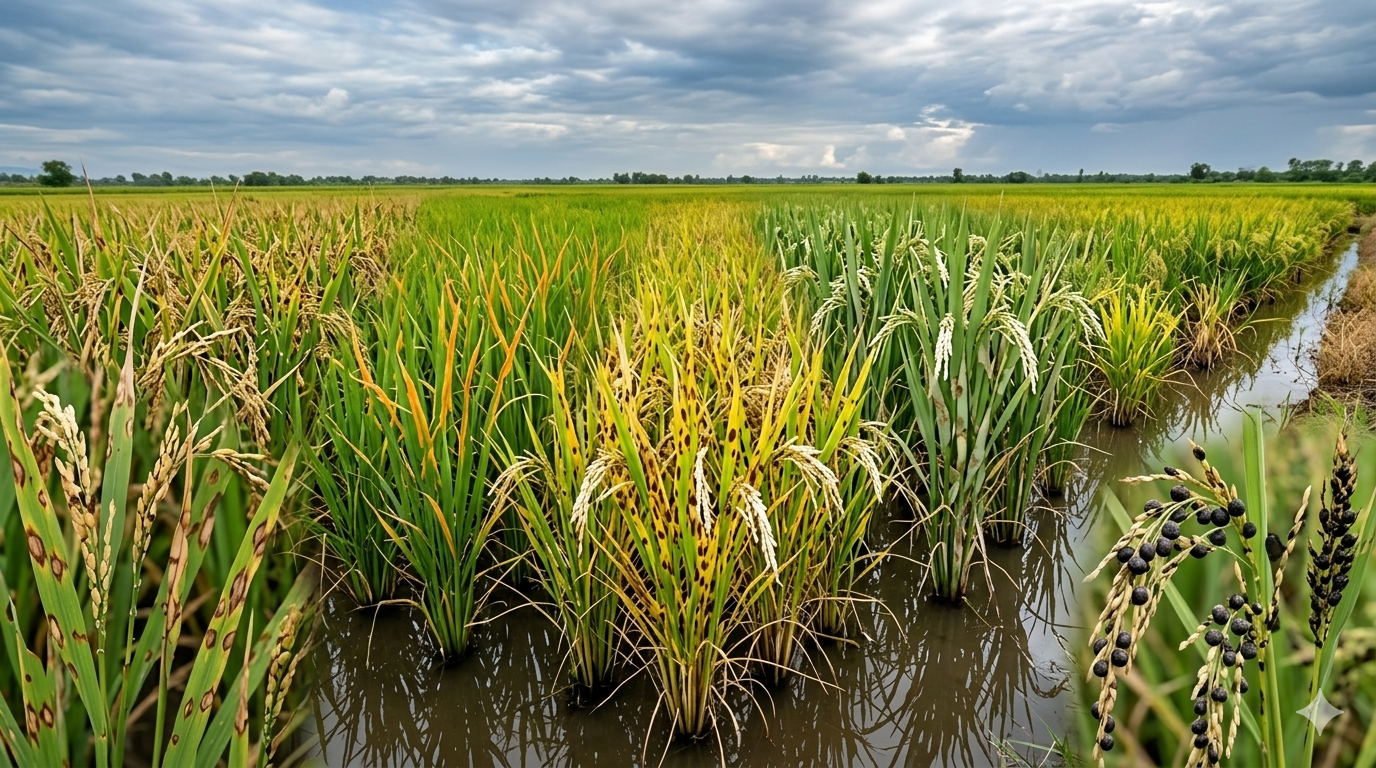
Not all crop losses are caused by visible pests. Some of the most devastating damage in rice fields comes quietly through diseases that spread leaf by leaf, plant by plant, often going unnoticed until it is too late. By the time symptoms become obvious, yield loss is already underway. Understanding these diseases is the difference between a healthy harvest and a compromised crop.
Why Rice Diseases Are a Serious Concern
Rice diseases are caused by fungi, bacteria, and viruses that attack different parts of the plant—from leaves and stems to roots and grains. Their spread is often influenced by weather conditions, water management, crop density, and nutrient imbalance.
Unlike pests, diseases can spread rapidly across entire fields under favorable conditions, making early identification and preventive care essential.
1. Blast Disease – The Most Destructive Rice Disease
Rice blast is widely regarded as the most serious disease affecting rice cultivation.
Symptoms:
- Diamond-shaped spots on leaves with gray centers
- Lesions on necks and panicles
- Drying of infected portions leading to yield loss
Impact:
It can affect the crop at any stage from seedling to grain formation causing severe yield reduction if not controlled early.
Field Insight:
High humidity, frequent rainfall, and excessive nitrogen fertilization create ideal conditions for blast outbreaks.
2. Bacterial Blight – The Leaf Destroyer
This disease spreads quickly in irrigated and rainfed conditions, especially during storms.
Symptoms:
- Water-soaked streaks on leaf edges
- Yellowing and drying of leaves
- Wilting in severe cases
Impact:
Reduces photosynthetic area and overall plant vigor, leading to poor grain filling.
Practical Insight:
Wind-driven rain and irrigation water often accelerate its spread across fields.
3. Brown Spot – The Indicator of Poor Crop Health
Often linked to nutrient imbalance and stressed plants.
Symptoms:
- Small brown lesions on leaves
- Spots enlarge and may merge
- Leaves dry prematurely
Impact:
While sometimes considered a minor disease, severe infection can significantly reduce yield and grain quality.
Field Insight:
Fields with poor soil fertility or micronutrient deficiencies are more prone to brown spot.
4. Sheath Blight – The Yield Suppressor
A common disease in densely planted and high-input fields.
Symptoms:
- Lesions on leaf sheaths near water level
- White or gray patches spreading upward
- Lodging in severe cases
Impact:
Reduces plant strength and grain filling, leading to yield loss.
Practical Insight:
Excess nitrogen and high plant density increase susceptibility.
5. False Smut – The Grain Contaminator
This disease directly affects the grains.
Symptoms:
- Formation of greenish to black smut balls in place of grains
- Partial grain infection in panicles
Impact:
Reduces grain quality and market value.
Field Insight:
Often appears during high humidity conditions at flowering stage.
6. Bacterial Leaf Streak – The Subtle Spreader
Less aggressive than bacterial blight but still damaging.
Symptoms:
- Yellow to translucent streaks between veins
- Drying of leaf tips
- Reduced leaf efficiency
Impact:
Gradual reduction in plant health and productivity.
7. Tungro Disease – The Viral Threat
One of the most feared viral diseases in rice.
Symptoms:
- Yellowing or orange discoloration of leaves
- Stunted growth
- Reduced tillering
Impact:
Severely affects yield and can spread quickly through insect vectors.
Field Insight:
This disease is transmitted by planthoppers, making pest control indirectly critical for disease management.
8. Foot Rot – The Base Destroyer
A disease that affects the lower portion of the plant.
Symptoms:
- Yellowing and wilting of plants
- Rotting at the base of the stem
- Plant collapse
Impact:
Leads to plant death and significant yield loss.
9. Rice Smut – The Grain Sterility Issue
Another disease affecting grain formation.
Symptoms:
- Black powdery mass replacing grains
- Seed sterility
Impact:
Direct loss of harvestable produce.
Common Patterns Across Rice Diseases
Despite their diversity, most rice diseases share key characteristics:
- They thrive in high humidity and poor field aeration
- They are often triggered by imbalanced nutrition, especially excess nitrogen
- They spread rapidly under favorable environmental conditions
- They reduce yield by damaging leaves, stems, or grains
Practical Disease Management Insights
Effective disease management is not about last-minute spraying, it is about building crop resilience from the beginning.
- Use disease-resistant varieties whenever possible
- Maintain balanced fertilization—avoid excessive nitrogen
- Ensure proper spacing for airflow
- Adopt crop rotation to break disease cycles
- Manage water carefully—avoid prolonged stagnation
- Use biological and eco-friendly solutions to strengthen plant immunity
Expert Insight: Prevention is More Powerful Than Cure
Most rice diseases become uncontrollable once they spread widely. The real advantage lies in:
- Early detection through regular field scouting
- Understanding weather patterns that trigger outbreaks
- Strengthening plant health rather than relying only on treatments
A healthy crop is naturally more resistant to disease pressure.
Rice diseases are silent yield reducers that can compromise both quantity and quality of harvest. Their management requires a proactive, knowledge-driven approach that combines field observation, agronomic practices, and preventive care.
Farmers who understand disease behavior and act early not only protect their crops but also ensure sustainable productivity and long-term soil health.
#RiceDiseases #PaddyFarming #CropProtection #PlantHealth #SustainableAgriculture #RiceFarmers #AgriKnowledge #DiseaseManagement #OrganicFarming #FarmersIndia #CropCare #AgriInnovation