

The Hidden Invaders Behind Crop Disease
Learn to Recognize Fungal Problems Before They Become Field-Wide Losses
A few spots on a leaf may look harmless today, but under the right conditions, a fungal disease can move through a crop surprisingly quickly. The key to protecting your crop is not simply spraying when symptoms appear, it is understanding what the fungus needs, how it spreads, what symptoms it produces, and how to break its disease cycle.
What Exactly Is a Plant-Disease Fungus?
Fungi are microscopic organisms that can live in soil, crop residues, seeds, plant debris and other organic matter. Many fungi are beneficial and play an essential role in decomposition and nutrient cycling. However, some species are plant pathogens, organisms capable of infecting living plants and causing disease.
A fungal pathogen may attack roots, stems, leaves, flowers, fruits, seeds or even storage tissues. Depending on the crop and the pathogen, the resulting disease may appear as leaf spots, blight, damping-off, root rot, stem rot, fruit rot, wilting, cankers, mildew or abnormal plant growth.
One important point is that not every spot, yellow leaf or wilted plant is caused by a fungus. Nutrient deficiencies, insects, bacteria, viruses, nematodes, water stress, herbicide injury and unfavorable environmental conditions can produce similar symptoms.
That is why correct diagnosis should come before treatment.
Why Fungal Diseases Become Serious
A fungal disease does not depend on the fungus alone. Disease development generally depends on an interaction between three things:
A susceptible host + a disease-causing pathogen + favorable environmental conditions.
If a susceptible crop is present and the weather provides suitable temperature, moisture and humidity, the disease can establish and spread.
This explains why a crop can look perfectly healthy for several days and then suddenly show extensive disease after a period of rain, high humidity, heavy dew, poor ventilation or excessive irrigation.
The environment is often the factor that turns a small infection into a serious outbreak.
The Most Common Signs of Fungal Infection
1. Leaf Spots
Leaf spots are among the most recognizable symptoms of fungal disease.
They may begin as tiny yellow, brown, black, reddish or water-soaked areas and gradually enlarge. Some spots develop a darker border, concentric rings or a dead center. Under favorable conditions, numerous spots may merge, causing large portions of the leaf to die.
As the affected leaf tissue dies, the plant loses photosynthetic capacity. When disease becomes severe, leaves may turn yellow, dry and fall prematurely.
However, remember that leaf spots alone do not prove that a disease is fungal. Several bacterial diseases and non-infectious problems can also produce spots.
2. Blight
Blight generally refers to rapid and extensive death of plant tissue.
Instead of remaining as clearly defined individual spots, lesions may expand rapidly and cause large areas of leaves, flowers, stems or other plant parts to become brown, black or dead.
Blight can become particularly destructive when warm or cool wet conditions persist, depending on the particular pathogen.
Once significant tissue has died, it cannot simply be made healthy again. Disease management therefore focuses heavily on preventing new infections and slowing further spread.
3. Wilting
Fungal pathogens can also cause wilting.
Some fungi attack roots or the vascular system of the plant, interfering with the movement of water and nutrients. The plant may begin to wilt even when the surrounding soil contains sufficient moisture.
In some cases, wilting begins on one side of the plant or affects older leaves first. In other cases, the entire plant gradually loses vigor.
This is one reason why simply adding more water to a wilted plant can make the problem worse. If the underlying problem is a root or soil-borne fungal disease, excessive irrigation may create even more favorable conditions for disease development.
4. Powdery Growth
Some fungal diseases produce a visible powdery or flour-like coating on leaves and stems.
Powdery mildew is a classic example. White or grayish fungal growth may appear on the surface of leaves and gradually spread across larger areas.
Affected leaves may become yellow, distorted or prematurely dry.
The appearance of a white coating is a useful warning sign, but diagnosis should still consider the crop, location, environmental conditions and other symptoms.
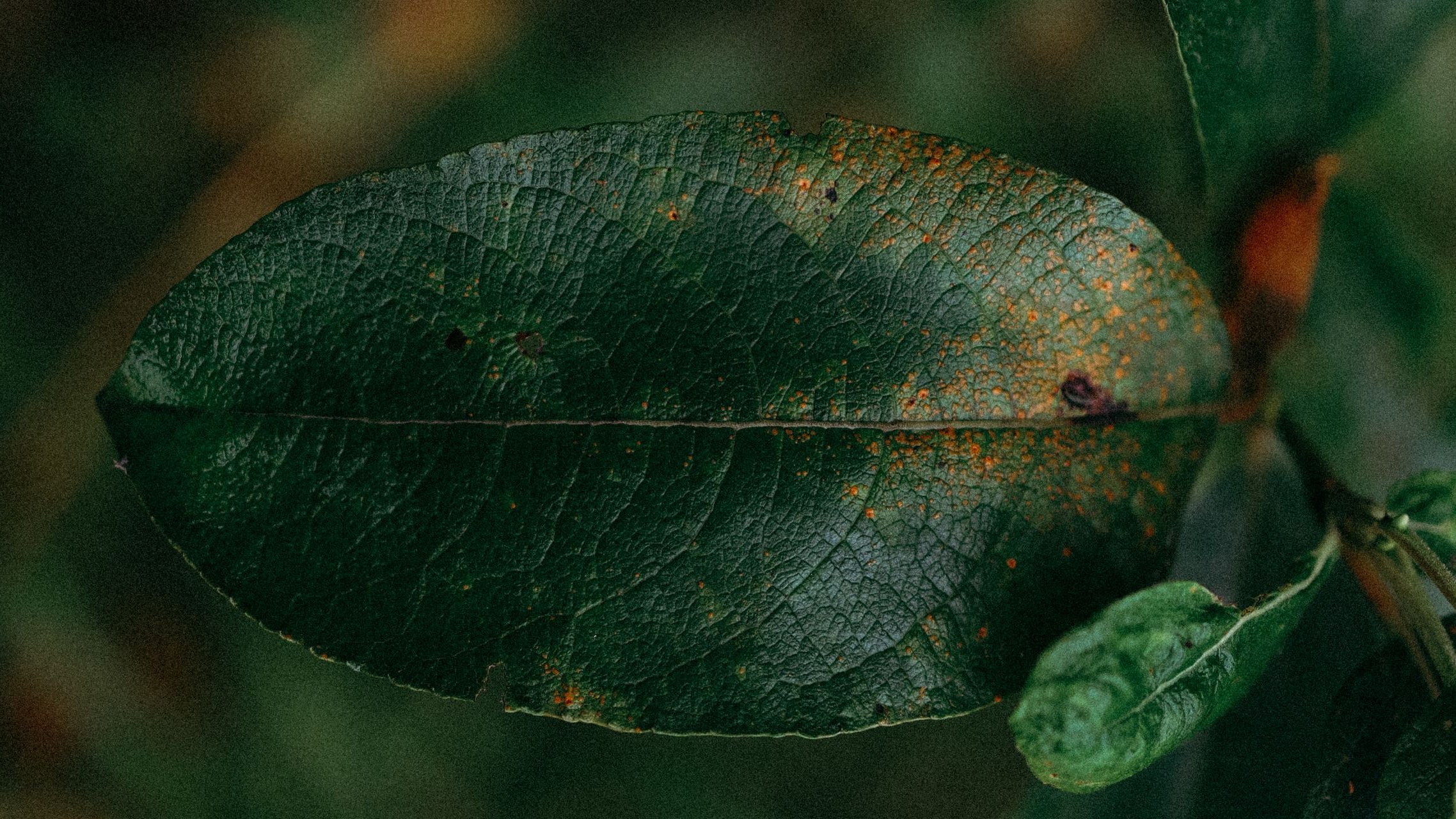
5. Rust-Like Spots and Pustules
Rust diseases can produce characteristic orange, yellow, reddish-brown or dark powdery structures, often on the underside of leaves.
These structures contain fungal spores. When disturbed, some can leave a powdery residue on fingers, clothing or tools.
Rust diseases can reduce the functional leaf area of the plant and, when severe, cause premature leaf death and reduced crop performance.
6. Stem Cankers and Rot
Fungal pathogens do not restrict themselves to leaves.
Some attack stems and branches, producing sunken, discolored or dead areas commonly referred to as cankers. Others cause soft or dry rotting of stems, roots or fruits.
A stem infection can become particularly serious because it may interfere with water and nutrient movement or weaken the structural integrity of the plant.
7. Root Rot
Root diseases are among the most difficult problems for farmers because the infection may progress below the soil surface before obvious symptoms appear above ground.
Typical warning signs may include:
- Poor plant growth
- Yellowing leaves
- Wilting despite adequate soil moisture
- Stunted plants
- Brown or blackened roots
- Reduced root hairs
- Soft or decaying roots
- Stem discoloration near the soil line
- Uneven growth within the field
By the time severe above-ground symptoms appear, significant root damage may already have occurred.
How Fungi Spread Through a Crop
Understanding transmission is extremely important because fungal disease management is not only about killing the pathogen, it is about breaking the pathway through which the pathogen moves.
Fungal spores can be transported by wind, splashing rain, irrigation water, insects, farm workers, tools, machinery, infected planting material and contaminated soil.
Infected leaves and crop residues can also act as sources of inoculum for future infections.
A diseased plant should therefore not be viewed as an isolated problem. It can become a source of infection for neighboring plants.
This is why early scouting and sanitation are so important.
Why Rain and Humidity Matter So Much
Many fungal diseases thrive when leaves remain wet for extended periods.
Rain, dew, fog, overhead irrigation and high humidity can create favorable conditions for spore germination and infection.
Dense crop canopies can make the situation worse because air movement is restricted and moisture takes longer to evaporate.
This is particularly important in protected cultivation, shade-net structures, greenhouses and densely planted fields where humidity can remain high around the foliage.
Wet leaves + poor airflow + susceptible plants = a situation that deserves immediate attention.
But there is an important qualification: not every fungus prefers exactly the same temperature or moisture conditions. Disease development depends on the particular pathogen and crop.
The Difference Between Infection and Visible Damage
One of the most important concepts in crop protection is that the disease process can begin before you see the disease.
A fungal spore may land on a leaf, germinate and penetrate plant tissue before obvious symptoms become visible.
Therefore, waiting until an entire field shows symptoms is generally a poor disease-management strategy.
Regular scouting allows the farmer to detect the first suspicious symptoms and respond before the pathogen has had many opportunities to reproduce and spread.
Why One Diseased Leaf Can Become Many Diseased Plants
Fungal diseases can follow a repeating cycle:
Infection → disease development → spore production → dispersal → new infection → more spores.
When weather remains favorable, this cycle can repeat several times during a crop season.
This is why a small initial infection can become a field-level problem if it is ignored.
The objective of disease management is therefore to interrupt this cycle at as many points as possible.
How to Inspect Your Crop for Fungal Disease
Do not wait until disease becomes obvious from a distance.
Walk through the field regularly and examine plants carefully.
Start by looking at the overall crop. Are plants growing uniformly? Are some areas weaker than others? Are symptoms concentrated in low-lying areas, poorly drained sections, field edges or dense patches?
Then inspect individual plants.
Look at both the upper and lower surfaces of leaves. Some fungal structures are much easier to see on the underside.
Check the stems, leaf junctions, crown area, roots where practical, flowers and fruits.
Look for changes in color, texture, spots, lesions, powdery growth, unusual growth, rotting or premature drying.
Also examine whether symptoms are occurring randomly or following a pattern.
A disease appearing in several neighboring plants may suggest a spreading problem, while uniform symptoms across the entire field may also indicate an environmental or nutritional problem.
Do Not Diagnose a Fungus From One Symptom Alone
This is one of the most important practical lessons for farmers.
Brown spots do not automatically mean fungus.
Yellowing does not automatically mean fungus.
Wilting does not automatically mean fungus.
Even white growth does not always provide enough information for a final diagnosis.
Good diagnosis considers the combination of:
Crop + plant part affected + symptom appearance + symptom progression + field distribution + weather + irrigation + crop stage + recent farm practices.
When the diagnosis is uncertain, a crop expert, plant pathologist or agricultural diagnostic laboratory can help confirm the cause.
How Farmers Can Reduce Fungal Disease Pressure
Start With Healthy Planting Material
Disease prevention begins before planting.
Use healthy, quality seed and planting material. Avoid introducing visibly diseased seedlings, cuttings, tubers or other planting material into a healthy field.
A disease-free beginning can significantly reduce the initial pathogen load.
Maintain Good Field Sanitation
Remove severely infected plant material when appropriate and manage crop residues properly.
Do not casually leave heavily diseased leaves and fruits lying around the crop if they can serve as sources of inoculum.
Clean tools that have contacted infected plants before using them extensively in healthy areas.
Sanitation becomes particularly important when pruning, harvesting or handling plants with known disease problems.
Avoid Excessive Irrigation
More water does not always mean healthier plants.
Excessive irrigation can keep soil and plant surfaces wet for longer periods and may create conditions favorable to root and foliar diseases.
Irrigation should be based on crop requirement, soil condition, weather and the production system.
Where appropriate, avoid unnecessary overhead irrigation that keeps foliage wet for prolonged periods.
Improve Air Movement
Good airflow helps foliage dry faster.
Avoid unnecessarily dense planting. Maintain suitable plant spacing and manage excessive vegetative growth where agronomically appropriate.
In protected cultivation, ventilation becomes particularly important because humidity can accumulate quickly.
A crop canopy that remains wet for long periods deserves immediate attention.
Manage Drainage
Standing water is a major warning sign, particularly for diseases affecting roots and lower stems.
Poor drainage can create prolonged wet conditions around the root zone and may increase disease pressure.
Proper field grading, drainage channels, raised beds or other suitable drainage measures can help depending on the crop and soil.
The Role of Resistant or Tolerant Varieties
Where suitable varieties are available, disease resistance or tolerance can be one of the most valuable disease-management tools.
A resistant variety may not remain completely disease-free under every condition, but it can reduce disease development and help protect yield.
Farmers should therefore consider disease history when selecting varieties, particularly in fields where a particular disease repeatedly occurs.
Nutrition Also Matters
A healthy crop is not immune to fungal disease, but balanced crop nutrition helps plants maintain normal growth and physiological function.
Both nutrient deficiency and excessive fertilization can create problems.
For example, excessive vegetative growth under high nitrogen availability may create a dense canopy that retains moisture and reduces airflow.
Therefore, fertilizer decisions should be based on the crop's actual requirements rather than the assumption that more fertilizer always means more protection.
Where Do Fungicides Fit In?
Fungicides can be an important part of fungal disease management, but they should not be considered the only solution.
The effectiveness of a fungicide depends on the pathogen, crop, disease stage, active ingredient, application timing, coverage, environmental conditions and correct use according to the product label.
One of the most common mistakes is waiting until disease is severe and then expecting a spray to restore damaged tissue.
In many situations, fungicides are most effective when used preventively or very early in disease development.
A dead leaf cannot be made green again simply by killing the pathogen that caused it.
Be Careful About Repeatedly Using the Same Fungicide
Fungal pathogens can develop resistance to fungicides when products with the same mode of action are repeatedly and improperly used.
Therefore, responsible fungicide use involves following the label, respecting recommended doses and intervals, and using appropriate mode-of-action rotation or mixtures where recommended.
More chemical does not necessarily mean better disease control.
Correct diagnosis + correct product + correct dose + correct timing + correct coverage is far more important than simply increasing spray frequency.
Can Biological Approaches Help?
Yes. Biological disease-management approaches can form part of an integrated fungal disease-management program.
Certain beneficial microorganisms and biological products can help suppress plant pathogens through mechanisms such as competition, antagonism, colonization of plant surfaces or roots, and other biological interactions.
However, biological products should not be treated as universal replacements for diagnosis and good agronomic practices.
Their performance can depend on the crop, pathogen, environmental conditions, application method and product quality.
The strongest approach is usually integration rather than dependence on a single method.
A Practical Fungal Disease Management Routine
For farmers, the following approach is simple and highly practical.
First, scout regularly. Do not inspect the crop only after symptoms become severe.
Second, identify the pattern. Determine where the symptoms are appearing and which plant parts are affected.
Third, inspect closely. Check both sides of leaves, stems, fruits and the root zone where possible.
Fourth, consider the weather. Recent rain, dew, humidity, irrigation and poor airflow can provide important clues.
Fifth, remove or manage disease sources where appropriate. Do not allow heavily infected material to become an uncontrolled source of inoculum.
Sixth, correct the environment. Improve drainage, ventilation, spacing and irrigation management wherever necessary.
Seventh, choose treatment according to diagnosis. Do not spray a fungicide simply because the leaves look damaged.
Finally, monitor the crop after treatment. The objective is not merely to make one application; it is to determine whether disease progression has slowed and whether new infections are appearing.
Five Questions to Ask Before Treating a Suspected Fungal Disease
Before reaching for a spray, ask:
What exactly am I seeing?
Is the problem actually fungal?
Where did the symptoms begin and how are they spreading?
What environmental conditions are currently favoring the disease?
What can I change in the crop besides applying a treatment?
These five questions can prevent unnecessary applications and help farmers make better crop-protection decisions.
The Biggest Mistake: Treating the Symptom Instead of the Cause
A farmer sees spots and sprays.
The spots remain.
Another spray follows.
The disease spreads.
More products are added.
This cycle can become expensive without solving the underlying problem.
Effective fungal disease management is fundamentally about breaking the disease cycle.
If excessive moisture is driving the disease, improve moisture management.
If infected residues are providing inoculum, address sanitation.
If susceptible planting material is responsible for repeated problems, improve planting-material selection.
If the disease requires a specific fungicide, use the appropriate product correctly and at the appropriate stage.
The treatment should match the biology of the problem.
A Farmer's Golden Rule
Don't wait for the whole crop to tell you that something is wrong.
One suspicious leaf can be an early warning.
One diseased plant can be a source of inoculum.
One period of favorable weather can accelerate disease development.
And one incorrect diagnosis can result in wasted money and lost time.
The farmer who regularly observes the crop, understands the conditions that favor disease and responds early has a major advantage.
Fungus Is Not Always the Enemy
It is also important to remember that fungi are not inherently harmful.
The agricultural ecosystem contains enormous numbers of beneficial fungi that contribute to decomposition, nutrient cycling, soil health and biological interactions around plant roots.
The real objective is not to eliminate every fungus from the farm.
It is to identify harmful plant-pathogenic fungi and manage them without unnecessarily disturbing the broader agricultural ecosystem.
That is the foundation of modern integrated disease management.
Final Takeaway: See the Symptom, Understand the Cause
Fungal diseases can be destructive, but they are not mysterious.
They follow biological patterns.
They need suitable conditions.
They produce recognizable symptoms.
They spread through identifiable pathways.
And their impact can often be reduced through early detection, sanitation, appropriate irrigation, good airflow, healthy planting material, suitable varieties, biological approaches and correctly selected crop-protection products.
The most effective disease-management strategy begins not with a spray bottle, but with careful observation.
When you learn to recognize how fungal diseases begin, develop and spread, you stop treating every damaged leaf the same way and start managing the actual problem.
Know the fungus. Read the crop. Break the disease cycle. Protect the harvest.
#KnowYourFungus #FungalDisease #PlantDisease #CropProtection #FungusManagement #PlantPathology #HealthyCrops #SmartFarming #SustainableAgriculture #FarmersEducation #DiseaseManagement #CropHealth #AgriKnowledge #IntegratedDiseaseManagement #BetterHarvest